


La Roche-Posay’s first living lab experience in the country concluded in Lagos after an opening party and a three-day programme. Held from 4 to 6 November 2026 at Oasis by The Five Palm, Victoria Island. The event welcomed over 500 guests, including Nigerian stakeholders, consumers, healthcare professionals and skincare experts.
What Is the La Roche-Posay Living Lab?
Inspired by the Living Lab in Paris, the experience brought skincare science closer to Nigerian consumers and healthcare professionals. It marked the brand’s first Living Lab in the country, creating a platform for more accessible conversations around skin health. As well as dermatological innovation and everyday skincare.
Living Lab: Expert-Led Sessions on Dermatology and Skin Health
The experience opened with an exclusive session for healthcare professionals and invited guests, then welcomed the public for two days. Each day featured three expert-led sessions exploring:
- The role of dermatology and scientific research in advancing skin health
- The wider impact of skin conditions on everyday life
- The importance of understanding product safety, tolerance and efficacy
The sessions brought together healthcare professionals and representatives from across the dermatological beauty and skincare community in Nigeria, encouraging knowledge-sharing and stronger connections between science, expertise and consumer education.
Five Innovation Corners Explained Skin Concerns
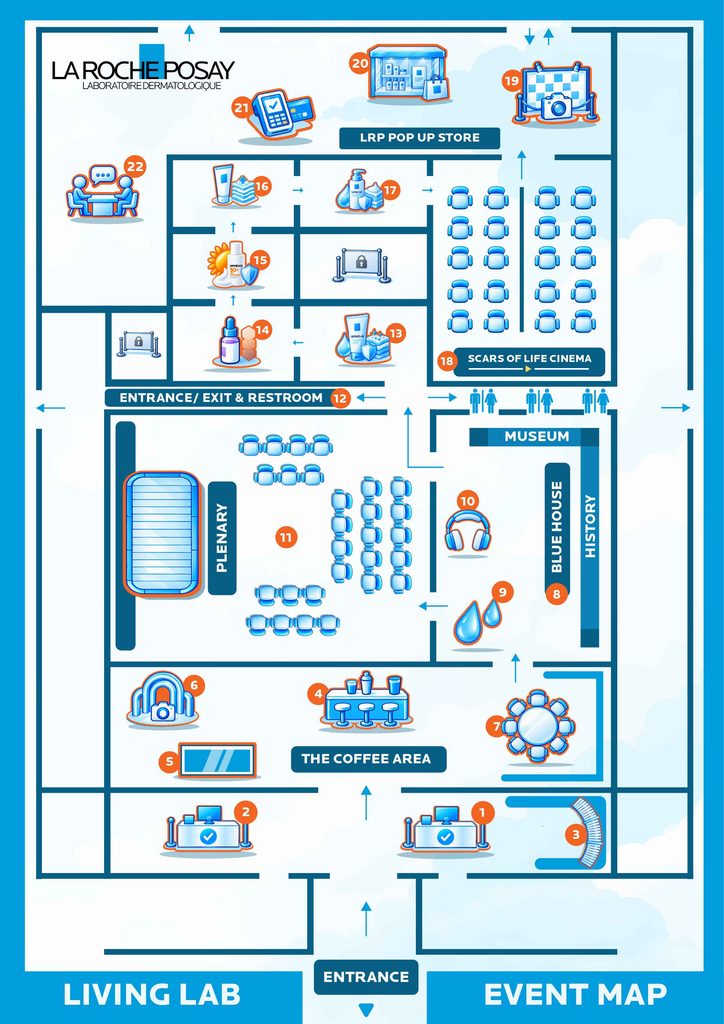
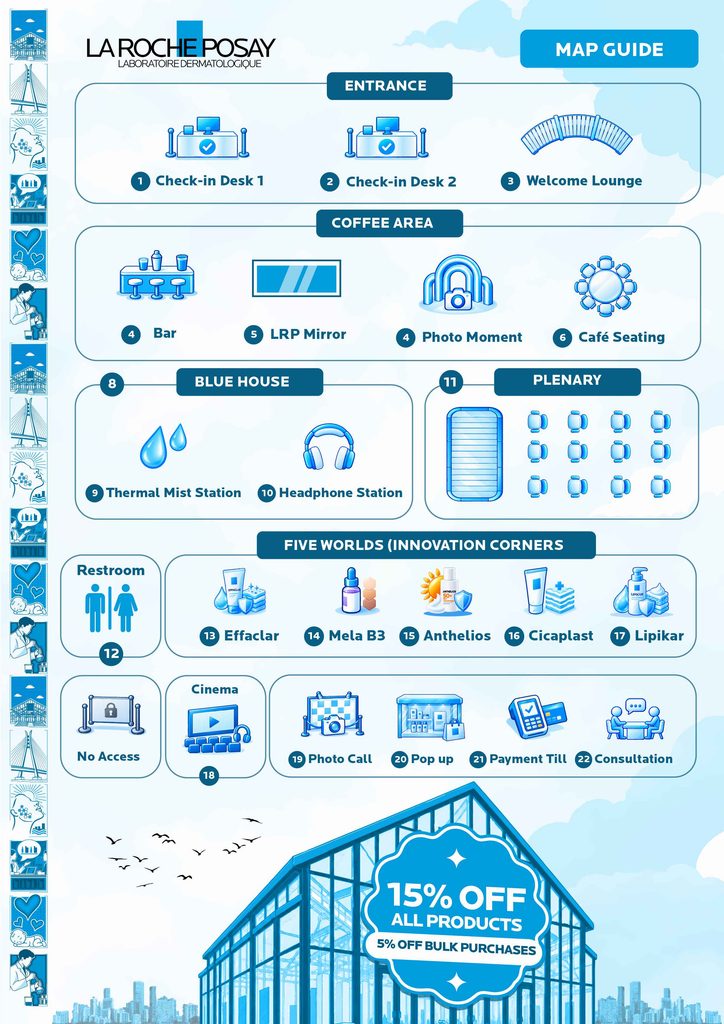
Visitors explored five dedicated Innovation Corners showcasing La Roche-Posay’s Effaclar, Mela B3, Anthelios, Cicaplast and Lipikar ranges. Each space introduced visitors to specific skin concerns and the science behind the brand’s product formulations.
Through interactive demonstrations and guided product experiences, guests learned how targeted skincare can address different skin concerns:
- Anthelios: Visitors used a UV camera to see the effects of ultraviolet exposure and understand the importance of sun protection.
- Effaclar and Mela B3: These spaces explored concerns including blemishes and hyperpigmentation.
- Cicaplast and Lipikar: These corners introduced approaches to caring for sensitive, damaged and dry skin.
The Blue House and Scars of Life Cinema
Beyond the Innovation Corners, visitors explored the Blue House, which presented La Roche-Posay’s history and commitment to dermatological innovation, and the Scars of Life Cinema. The cinema screened a 25-minute film exploring the physical and psychological realities of living with scars and scarring, including their impact on self-image and everyday life. The film also highlighted how Lipikar supports the care of skin affected by scarring, bringing attention to the importance of addressing both the visible and less visible experiences associated with skin conditions.
One-on-One Skin Consultations and Product Discounts
The programme also created opportunities for visitors to engage with skincare experts and dermatologists through one-on-one consultations, ask questions about their individual skin concerns and receive guidance on building appropriate skincare routines. Visitors could then explore and purchase recommended products at the Konga pop-up, with discounts of up to 15% available.
What the Experts Said About Skin Health
“Skin conditions should not be treated based on assumptions or advice picked up from social media. Acne, hyperpigmentation, eczema and other concerns can have different underlying causes and require different approaches to management. Using the wrong products or adopting unsuitable routines can aggravate existing concerns rather than improve them,” said Dr Folakemi Cole-Adeife, Consultant Physician and Dermatologist, and member of the L’Oréal Dermatologist Beauty MedSquad.
“This is why initiatives like La Roche-Posay’s Living Lab are valuable. They create opportunities to bridge the gap between dermatological knowledge and everyday skincare decisions, helping people understand their skin and make more informed choices based on their actual needs, rather than trends or trial and error,” she added.
Reflecting on the experience, Anaïs Routhiau, Business Development Manager, LID, L’Oréal Dermatological Beauty, Sub-Saharan Africa, said, “The Living Lab provided an opportunity to bring La Roche-Posay’s heritage, dermatological expertise and commitment to skin health closer to Nigerian consumers. Across the programme, we engaged with healthcare professionals and members of the public, creating opportunities for people to learn more about their skin and understand how dermatological science informs the products we develop. It was encouraging to see the interest in skin health education and the level of engagement throughout the experience.”
Why the First Living Lab in Nigeria Matters
The first edition of Living Lab Nigeria marked an important opportunity for La Roche-Posay to strengthen its engagement with consumers and the medical community, bringing dermatological knowledge, product education and practical conversations about skin health into one shared experience.
About La Roche-Posay
Created by a pharmacist in 1975, La Roche-Posay is present in over 50 countries and is recommended by over 100,000 dermatologists worldwide. It provides a unique range of daily skincare developed for every skin type, from newborns to cancer patients, from UV protection to repairing severely fragile skin. La Roche-Posay’s formulas are developed with exclusive selenium-rich thermal spring water, due to its antioxidant and soothing properties.
Developed using a strict formulation charter with a minimal number of ingredients at optimal concentrations, La Roche-Posay products undergo stringent clinical testing for efficacy and safety, even on sensitive skin. La Roche-Posay understands that skin health has a profound impact on overall wellbeing and works alongside the medical community to advance dermatology and pioneer new approaches to care. Committed to the skin we live in and the planet we live on. Since 2023, all products are manufactured in factories using 100% renewable energy.


